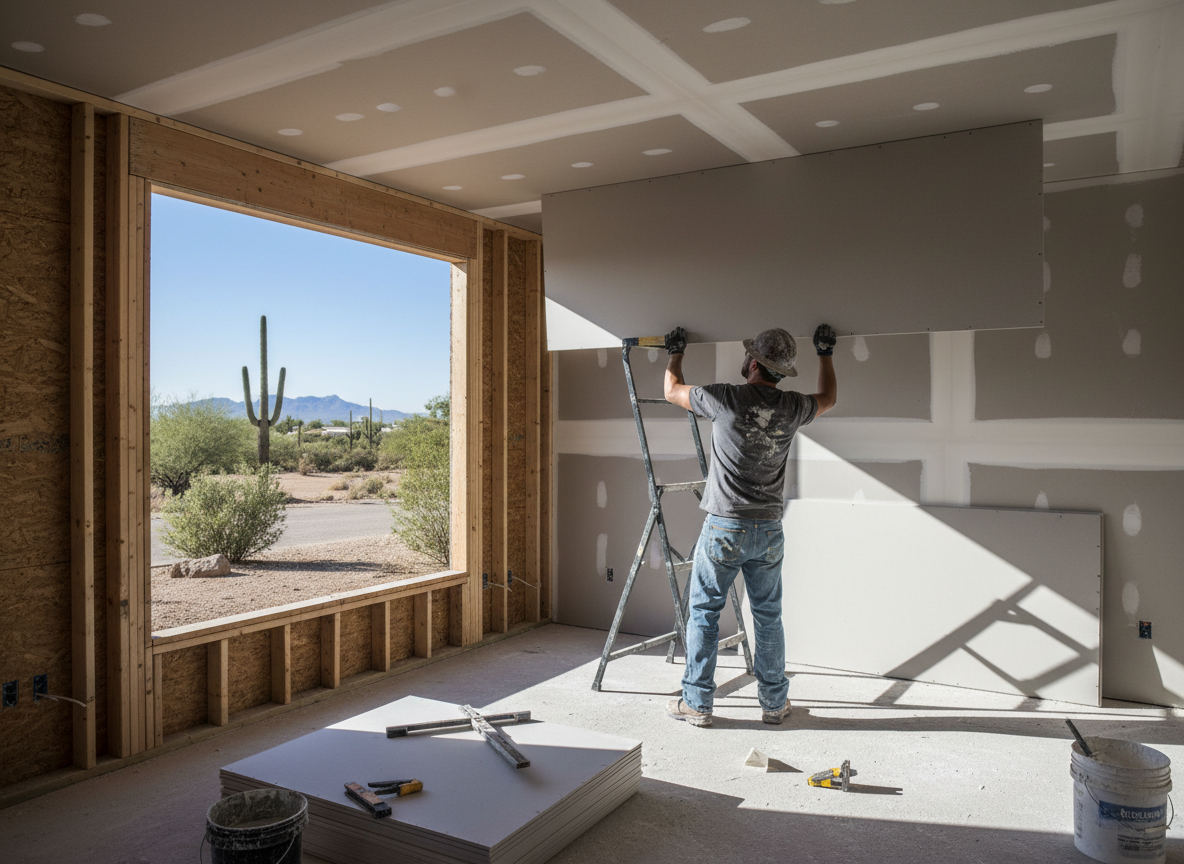
Gilbert homes in neighborhoods like Layne Heights and San Tan Ranch often feature wood-framed construction that moves with the hot desert climate. Daytime highs above 110 degrees cause framing lumber to expand while cool nights create contraction, stressing sheetrock joints. Proper installation requires leaving expansion gaps at ceilings and using flexible tape compounds rated for thermal cycling rather than standard all-purpose mud.
Serving clients from Agritopia to Power Ranch and nearby Chandler and Mesa, we frequently encounter moisture issues near the Riparian Preserve where irrigation and monsoon runoff raise indoor humidity. This leads to edge cracking along exterior walls if vapor barriers or proper ventilation were skipped during original construction. We always check for these conditions before hanging new panels to prevent callbacks.
In Maricopa County, building codes require 5/8-inch Type X drywall in garages and certain utility spaces. Older homes in Downtown Gilbert sometimes have 1/2-inch panels that must be matched or upgraded for fire rating compliance. We carry both thicknesses on every truck and verify local permit requirements before starting any ceiling or partition work.
Seasonal Guidance
Desert heat accelerates joint compound drying, so we schedule finishing passes in early morning or evening hours to avoid flash setting. Monsoon season brings dust that can contaminate wet mud, requiring extra sealing of work areas in homes near Heritage Court and Gilbert Regional Park.
Technician insight
In Gilbert, the thing that catches most people out with Sheetrock Contractor is how quickly temperature swings between 110-degree days and 70-degree nights crack seams in Agritopia and Power Ranch homes if the wrong joint compound is used.
Ceiling Repair After Roof Leak
Homeowner in San Tan Ranch noticed sagging sheetrock after monsoon rains. We found water had soaked through the ceiling near an exterior wall. Removed damaged panels, dried the cavity, installed new moisture-resistant sheetrock, and retaped with flexible compound. Ceiling remained flat through the next summer heat cycle.
How it works
- 1
Site Assessment
Measure walls and ceilings, note framing type, check for moisture or prior repairs in Gilbert homes.
- 2
Material Selection
Choose correct thickness and fire-rated panels for the room, accounting for thermal movement in desert conditions.
- 3
Hanging and Fastening
Install sheets with proper screw spacing, leave expansion gaps, and secure to studs or joists.
- 4
Taping and Finishing
Apply tape and multiple coats of flexible compound, sanding between coats for smooth results.
- 5
Final Inspection
Verify seams, texture match, and cleanup before leaving the property.
Pricing
Project pricing depends on square footage, ceiling height, access, and whether moisture remediation is needed in Maricopa County homes.