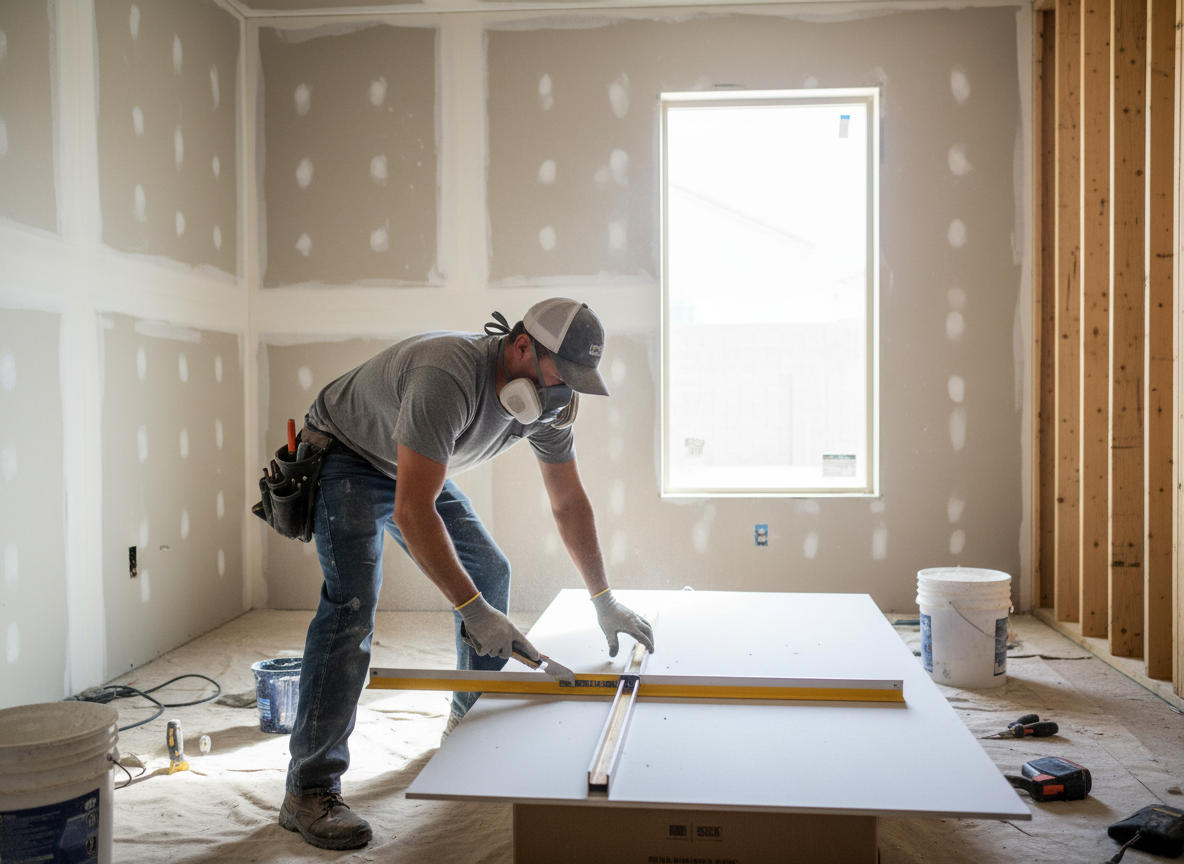
Gilbert homes in neighborhoods like Agritopia and San Tan Ranch often feature wood-frame construction from the early 2000s onward, where rapid temperature swings from 110-degree summer days to cooler nights cause drywall joints to crack along seams. Maricopa County building codes require specific fire-rated assemblies in attached garages and utility rooms, and we match those exact Type X panels and joint compounds during replacements. Dust from the surrounding desert infiltrates every cut, so we seal rooms with plastic sheeting and run negative-air machines to keep particles out of finished spaces in Power Ranch and Layne Heights.
Hot desert summers shorten working time for joint compound because low humidity pulls moisture out fast, forcing crews to mix smaller batches and work in shaded areas or early morning hours. Mild winters allow year-round interior work but bring occasional monsoon moisture that can warp untreated drywall if windows are left open during storms. We tape and finish to a level 4 or 5 depending on whether the surface will receive flat paint or textured finishes common in Queen Creek and Chandler border homes.
Edge cases include repairing water-damaged ceilings after roof leaks common in older Layne Heights properties and matching existing orange-peel textures without visible patches. We also handle commercial tenant improvements where code requires sound-rated partitions between suites. Every job starts with an on-site inspection to note existing insulation, electrical runs, and plumbing locations before any demolition begins.
Technician insight
In Gilbert, the thing that catches most people out with Local Drywall Contractor is how quickly joint compound skins over in 110-degree heat, especially on ceilings in Agritopia homes where poor attic ventilation makes the space even hotter. Homeowners often try to finish large areas in one go and end up with visible lap marks that show through paint.
Ceiling Repair After Monsoon Leak
A homeowner in San Tan Ranch noticed brown stains on a living-room ceiling after heavy rain. We found a roof flashing failure that had soaked the drywall and insulation. We removed the damaged section, dried the cavity, installed new moisture-resistant board, and finished to match the surrounding orange-peel texture before repainting.
How it works
- 1
Site Assessment
We inspect the affected walls or ceilings, note framing condition, and measure for material takeoffs while checking for hidden moisture in Gilbert homes.
- 2
Protection And Prep
Floors and adjacent surfaces are covered, HVAC vents sealed, and negative air established to control desert dust before any cutting begins.
- 3
Hang And Finish
New drywall is hung, taped, and finished to the required level, with texture matched to surrounding surfaces in areas like Downtown Gilbert or Heritage Court.
- 4
Final Cleanup And Walkthrough
All debris is removed, surfaces are wiped, and the homeowner inspects the work before we leave the site.
Pricing
Upfront written quotes after inspection, with final price based on square footage, texture complexity, and access conditions.