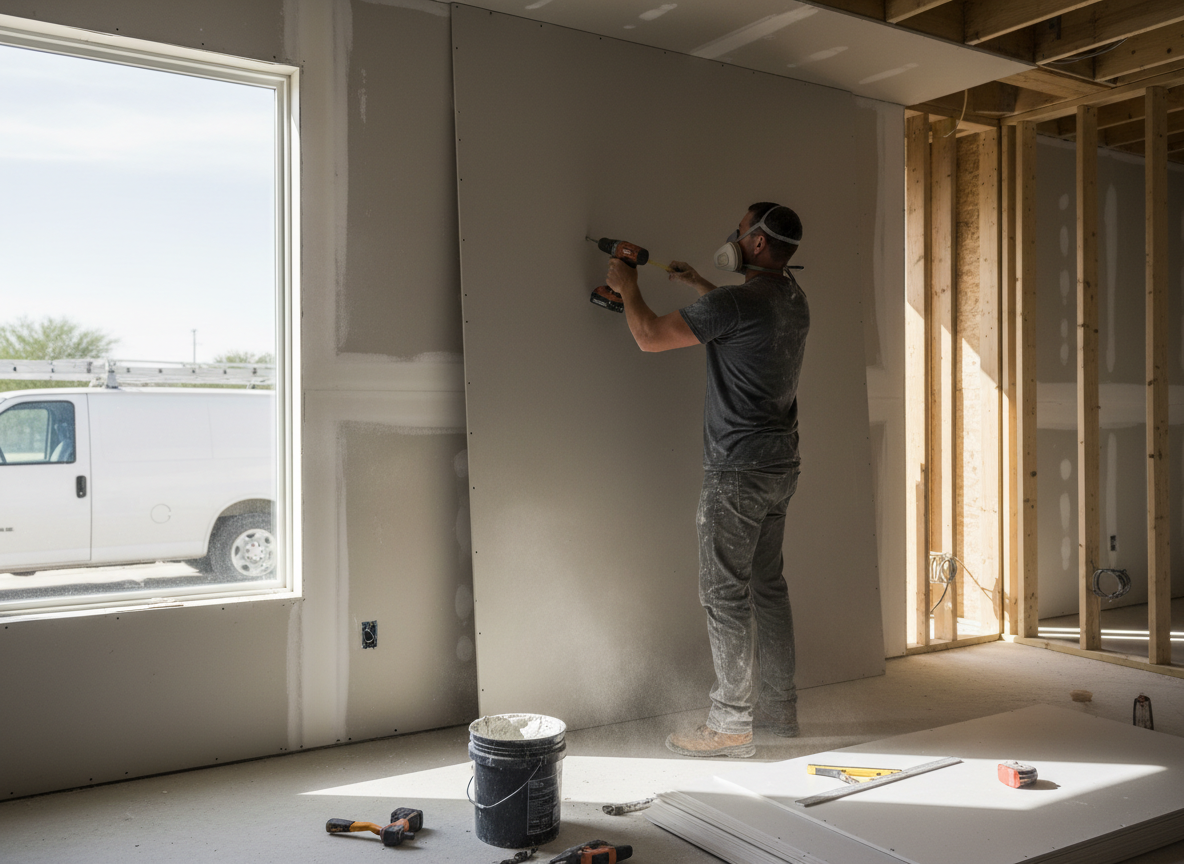
Gilbert homes in neighborhoods like Downtown Gilbert and Layne Heights often feature original drywall installed decades ago that has settled unevenly due to the flat desert terrain and occasional monsoon moisture. When matching texture on these older surfaces, contractors must account for the low-humidity desert air that accelerates joint compound drying and can create visible lap marks if not worked in small sections. Newer builds in Agritopia and San Tan Ranch use 1/2-inch or 5/8-inch Type X panels for fire code compliance in garages and shared walls; skipping the correct thickness during repairs leads to failed inspections in Maricopa County.
Hot summer temperatures above 110 degrees force crews to schedule heavy lifting and sanding for early morning or evening hours to prevent heat-related material failures and worker fatigue. Power Ranch and Queen Creek homes near the Riparian Preserve see more water-related drywall damage from irrigation overspray and roof leaks during rare winter rains. Using moisture-resistant green board in these areas prevents recurring mold issues that standard panels cannot handle. Chandler and Mesa spillover jobs require the same attention to local soil expansion that affects foundation movement and subsequent wall cracks.
Code updates in Maricopa County now require specific screw patterns and fire-taping details on multi-family projects that differ from single-family homes in Heritage Court. Skipping these steps during patch work around electrical boxes or HVAC penetrations creates future liability. Owner-operated crews based at 1911 E Baseline Rd keep material waste low by stocking only what the day’s jobs require rather than over-ordering for desert heat storage limitations.
Technician insight
In Gilbert, the thing that catches most people out with Drywall Contractors Near Me is assuming every wall is standard 1/2-inch drywall when many Downtown Gilbert and Layne Heights homes still have plaster over gypsum or thin 3/8-inch panels that crumble during removal. The desert heat also makes joint compound set too fast if you don’t keep the room cool, leaving ridges that show under the afternoon sun coming through west-facing windows common in Power Ranch layouts.
Cracked Corner in Agritopia Garage
Homeowner noticed recurring corner cracks after monsoon season. We found the original install missed the proper corner bead nailing schedule on 5/8-inch Type X board. We removed the loose sections, reset the bead with construction adhesive plus screws, retaped with fiberglass mesh and applied orange-peel texture to match the rest of the two-car garage. No further movement after three months of 110-degree days.
How it works
- 1
Site Assessment
Measure damaged areas, note existing texture type and check for moisture or structural movement common in Gilbert’s older housing stock.
- 2
Material Selection
Choose correct panel thickness and type for the home’s age and location, whether 1950s plaster-over-drywall in Layne Heights or modern fire-rated boards in Power Ranch.
- 3
Installation or Repair
Cut, hang and fasten panels using proper screw schedules, then tape and apply multiple coats while managing rapid drying from desert heat.
- 4
Finish and Texture Match
Blend new texture to surrounding walls using the same technique found in Agritopia or San Tan Ranch homes, followed by priming.
- 5
Final Walk-Through
Inspect under natural light at the address, confirm code compliance and schedule any punch-list items before leaving the site.
Pricing
Upfront quotes after on-site inspection; cost driven by square footage, texture complexity and whether moisture remediation is required.