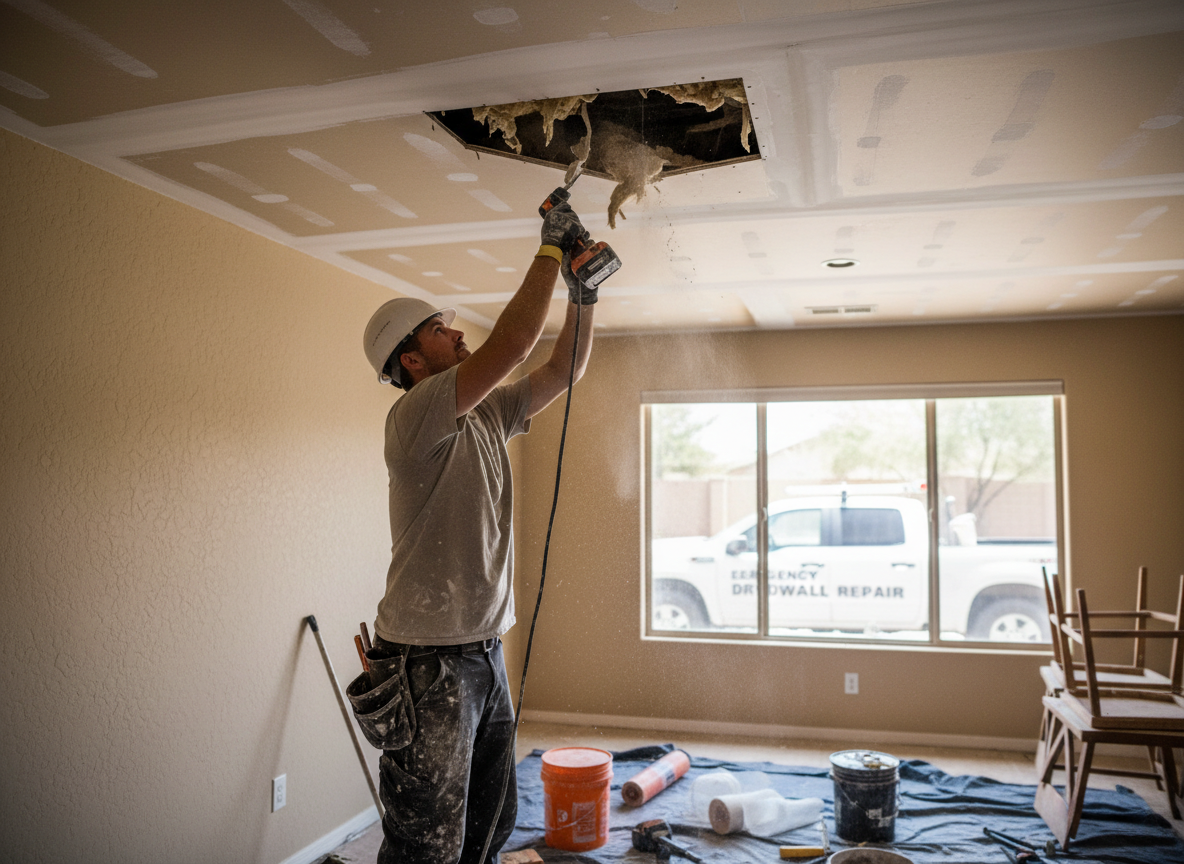
Gilbert homes in neighborhoods like Agritopia and Power Ranch often face emergency drywall issues from monsoon-driven roof leaks or air conditioning condensate lines that fail during the intense summer heat. Maricopa County building codes require specific moisture barriers and fire-rated assemblies in certain wall sections, so rushed patches without proper assessment can fail inspections or trap hidden mold behind the surface. Desert temperature swings between 110-degree days and cooler nights also stress tape joints, causing new cracks to appear weeks after the initial repair if expansion gaps are not addressed.
In older sections such as Layne Heights, plaster-over-lath walls are common and demand different removal techniques than the drywall found in newer San Tan Ranch builds. Emergency calls frequently involve cutting out saturated sections near windows or exterior doors where wind-driven rain penetrates stucco, then installing new sheets with the correct screw patterns and corner bead to match existing textures. Skipping a moisture meter reading on the studs before closing up the wall is a common shortcut that leads to recurring problems once the next rain hits.
Response times matter because standing water in ceilings or behind baseboards can migrate into adjacent rooms within hours in Gilbert's low-humidity air that still holds moisture against cooler interior surfaces. Technicians must coordinate with local plumbers on active leaks before any drywall work begins, and they carry multiple texture guns to replicate the knockdown or orange-peel finishes typical in Maricopa County tract homes. Proper ventilation during repairs prevents dust from settling on finished floors in occupied homes.
Technician insight
In Gilbert, the thing that catches most people out with Emergency Drywall Contractor is hidden moisture trapped behind stucco in homes built before 2005 around Layne Heights and Heritage Court. Monsoon rains push water under window ledges and it travels along the paper facing of the drywall for weeks before anyone notices a soft spot. Cutting too small a section leaves damp studs that later buckle when the next heat wave hits.
Ceiling Failure After Monsoon Leak
A ceiling in a Power Ranch home sagged after heavy rain pooled above the master bedroom. Inspection showed water had traveled from a compromised flashing along the roof edge into the attic insulation. We removed the saturated drywall, dried the joists, and reinstalled new sheets with the correct vapor barrier detail before texturing to match the rest of the room.
How it works
- 1
Initial Assessment
Arrive on site, locate the source of damage, and mark all affected areas while checking for active moisture in studs and insulation.
- 2
Containment and Removal
Set up plastic barriers to limit dust, then cut out compromised drywall sections and dispose of debris following local Maricopa County guidelines.
- 3
Drying and Preparation
Confirm the structure is dry with meters, treat any minor mold spotting, and install new drywall with proper fasteners and joint tape.
- 4
Finish and Texture Match
Apply compound, sand, and replicate the existing wall texture before priming so the repair blends with surrounding surfaces.
Pricing
Emergency response carries a premium over standard daytime work due to after-hours scheduling and immediate material mobilization.