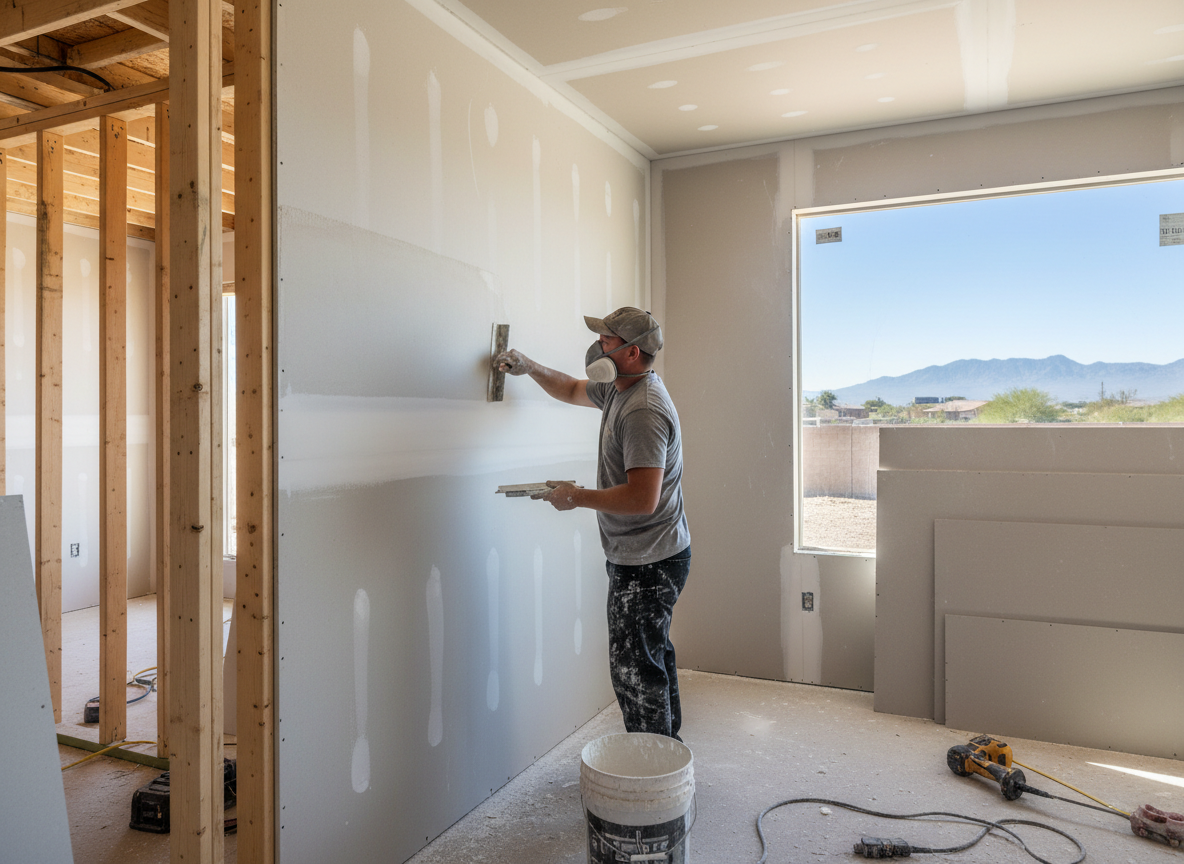
Gilbert sits in Maricopa County where summers push past 110 degrees and winters stay mild, forcing drywall crews to manage rapid material expansion and contraction. Homes in neighborhoods such as Downtown Gilbert, Agritopia, and San Tan Ranch range from 1980s ranch styles to newer builds, each presenting different substrate conditions and joint movement patterns. Crews working from the shop at 1911 E Baseline Rd routinely inspect for prior moisture intrusion around HVAC lines and window openings before hanging new sheets. Proper acclimation of panels and use of setting-type compounds prevent callbacks when temperatures swing sharply between day and night.
Power Ranch and Layne Heights properties often feature textured ceilings and layered drywall over older plaster transitions that crack under the constant pull of central air. Technicians select high-temperature joint compounds and fiberglass tape on these jobs because standard paper tape can telegraph movement once the system cycles hard in July. Matching existing textures requires on-site testing with the same spray equipment used on the original install rather than relying on generic charts. Work performed in Queen Creek and Mesa extensions follows the same sequence to keep seams invisible after paint.
Maricopa County building codes require proper fire-rated assemblies in garages and shared walls, and crews verify existing ratings before any modification. In the dry desert air, dust infiltration during sanding demands negative-air machines and sealed containment to protect finished flooring. Scheduling around peak heat lets crews work early mornings on exterior-adjacent walls where direct sun would otherwise soften fresh mud too quickly. These steps keep every patch or full room install aligned with the actual conditions found in Gilbert housing stock.
Technician insight
In Gilbert, the thing that catches most people out with Professional Drywall Services is how fast summer heat dries joint compound on south-facing walls near the Riparian Preserve, causing shrinkage cracks if you do not use setting-type mud on the first coat. Older homes in Layne Heights also hide previous flood repairs that reopen once the AC runs hard.
Ceiling Repair After HVAC Leak
A homeowner in Agritopia called after a ceiling panel sagged near a supply vent. Inspection showed repeated condensation from an attic unit running nonstop in July heat. Crews removed the affected sheet, added blocking, installed new moisture-resistant drywall, and finished with setting compound before texture match. The ceiling held through the next monsoon season without reopening.
How it works
- 1
Site Assessment
Walk the property in Gilbert or surrounding cities to measure damage, note texture, and check for underlying moisture or movement issues.
- 2
Material Staging
Select panels, tape, and compounds rated for desert temperature swings and bring them to the address at 1911 E Baseline Rd for acclimation.
- 3
Installation or Repair
Hang, tape, and finish to match existing surfaces while containing dust in occupied homes.
- 4
Final Inspection
Review seams under natural and raking light, then schedule paint-ready handoff with the homeowner.
Pricing
Upfront quotes after on-site inspection account for access, texture match, and material grade.