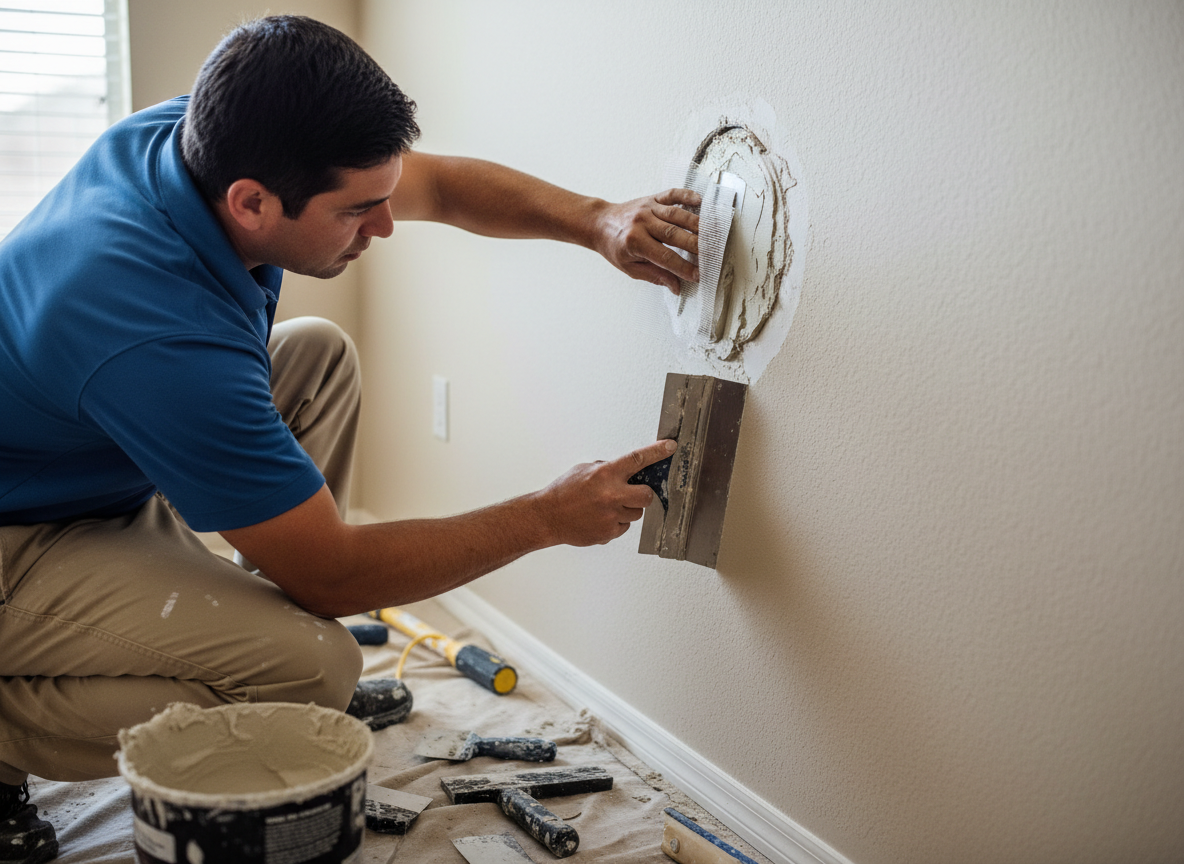
Gilbert sits in Maricopa County with housing stock ranging from 1980s ranch homes in Layne Heights to newer builds in San Tan Ranch and Queen Creek edges. Drywall in these homes often shows holes from door knobs, plumbing access or kids rooms. Hot desert summers push temperatures past 110 degrees, causing rapid expansion and contraction that can crack fresh patches if the wrong tape or compound is used. Mild winters bring less movement but monsoon moisture from the Riparian Preserve area can seep into walls near Gilbert Regional Park homes.
Repair work here starts with matching the existing drywall thickness and texture exactly, because many Power Ranch and Agritopia properties still carry the original 1/2 inch sheets installed decades ago. We cut back to solid backing, install mesh or paper tape depending on the location, and use setting-type compound that holds up when the AC cycles hard in summer. Homeowners in Chandler or Mesa often call after failed big-box patches that telegraph through once the heat returns.
Maricopa County permits are rarely required for small interior holes, yet we still follow the same fastening schedules and fire-code standards used on larger jobs so the repair blends with surrounding walls. Edge cases include holes near HVAC returns where airflow can dry compound too fast and holes in ceilings where weight adds stress. We always check for hidden wiring or pipes first, especially in older Downtown Gilbert properties that have seen multiple renovations.
Seasonal Considerations
Desert heat accelerates drying times, so we schedule longer cure periods between coats during July and August. Irrigation runoff near Heritage Court can raise wall moisture levels, requiring extra drying checks before finishing. Homeowners in Agritopia should expect texture matching to take extra care because those communities favor heavier knockdown finishes that show every mismatch in bright summer light.
Technician insight
In Gilbert the thing that catches most people out with Drywall Hole Repair is how fast the desert heat dries compound on south-facing walls near the Riparian Preserve. Homeowners try to patch in the afternoon and the mud cracks before they can second-coat it. We learned to work early morning or use slower-setting mixes on anything bigger than a doorknob hole.
Ceiling Patch After Light Fixture Removal in Power Ranch
A homeowner in Power Ranch needed a six-inch ceiling hole repaired after swapping a heavy chandelier. We found the original 1/2 inch drywall had no backing and the attic insulation had settled. We added wood backing, installed a new piece, feathered compound in three coats to match the heavy texture, and painted to blend before the afternoon heat hit.
How it works
- 1
Site Assessment
Inspect hole size, location, surrounding texture and any signs of moisture from irrigation or roof leaks common in Gilbert neighborhoods.
- 2
Preparation
Square the opening, install backing strips if needed, and protect floors and furniture from dust in the tight layouts typical of San Tan Ranch homes.
- 3
Patch Installation
Cut and secure new drywall, apply tape and setting compound in thin coats suited to the extreme temperature swings of Maricopa County.
- 4
Finish and Blend
Texture to match existing surface, prime, and paint with the same sheen used on the rest of the wall so the repair disappears under Gilbert sunlight.
Pricing
Pricing depends on hole size, location, texture complexity and whether multiple repairs are needed; we provide upfront quotes after inspection.