2026-11-20 ·
Repairing Water-Damaged Drywall After Monsoon Season
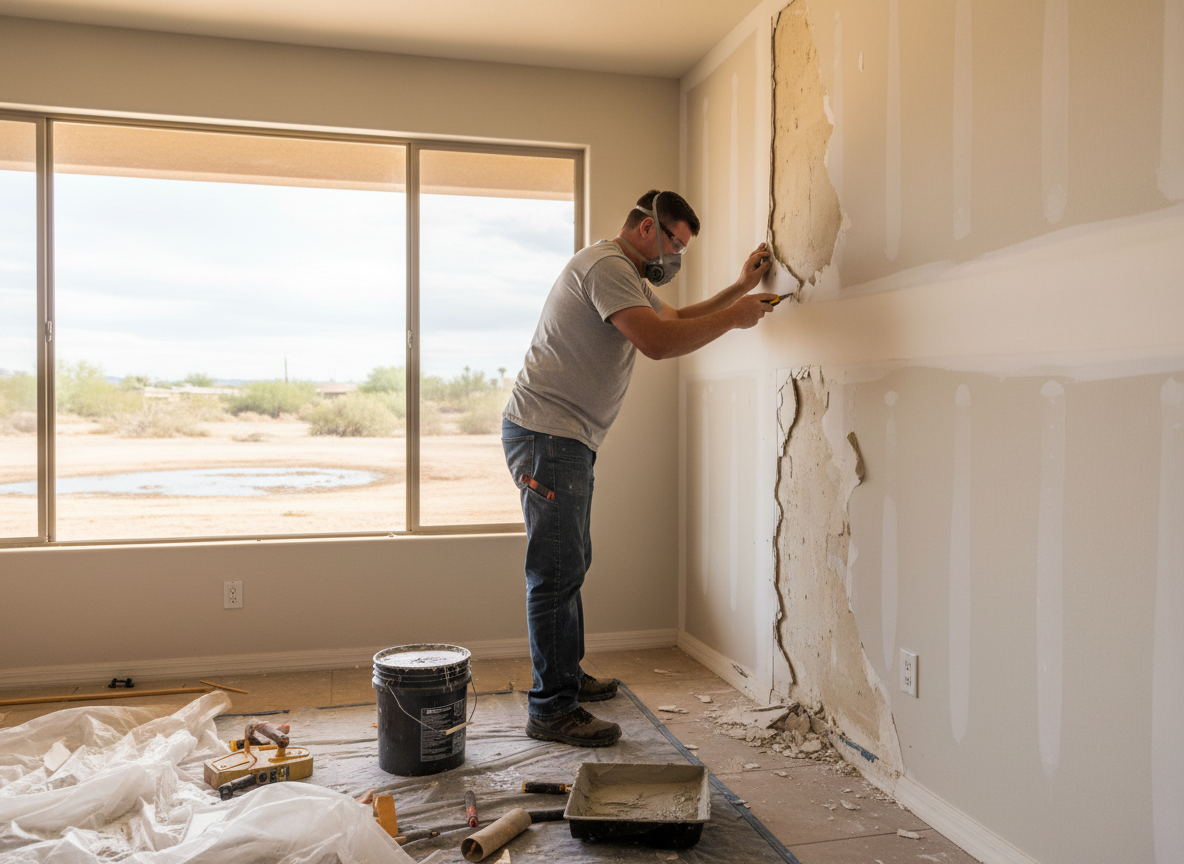
Repairing water-damaged drywall after monsoon season in Gilbert starts with cutting out all wet material at least 12 inches beyond visible stains, drying the cavity with dehumidifiers for 48–72 hours, then installing new 1/2-inch panels taped and coated with two layers of joint compound. This sequence keeps homes in Agritopia and Layne Heights from developing hidden mold during the remaining hot, humid weeks of summer.
Spotting Monsoon Damage in Gilbert Homes
Heavy monsoon downpours drop 1–2 inches of rain in under an hour across Maricopa County, and Gilbert tract homes built in the 1990s and early 2000s often have single-layer drywall that absorbs water at the base of exterior walls. Residents in Power Ranch and San Tan Ranch notice brown lines along baseboards after water pools near garage doors or patio slabs. Near Gilbert Regional Park and the Riparian Preserve, wind-driven rain also pushes moisture under window sills in homes facing open desert washes. Checking both sides of shared walls in Downtown Gilbert townhomes reveals damage that travels upward through the paper facing. Early detection prevents the need for larger sections of drywall water damage repair once temperatures climb back above 105 °F.
Drying the Structure Before Any Repair
After monsoon water enters a wall cavity, the first 48 hours determine whether the framing stays sound. Run commercial dehumidifiers set to 45 % relative humidity and aim box fans at the open studs for continuous airflow. In Queen Creek and Chandler homes with slab-on-grade construction, moisture can wick up from the soil for days, so place moisture meters on the bottom plate every 12 hours until readings drop below 12 %. Skipping this step leaves hidden dampness that later causes tape joints to bubble when new drywall is installed. Crews working out of the 1911 E Baseline Rd shop keep portable generators on site because afternoon storms can knock out power during the drying window.
Cutting and Replacing Affected Panels
Remove drywall in rectangular sections that reach the nearest stud on each side, then dispose of the wet material immediately to avoid spreading spores. Install new panels with 1 1/4-inch coarse-thread screws spaced 12 inches on center, keeping the new sheet 1/2 inch off the floor to guard against future wicking. In bathrooms of Mesa and Gilbert homes, switch to moisture-resistant board on the lower 4 feet. Feather joint compound out 12–18 inches on each side of seams so the repair disappears under one coat of primer. Homeowners who need same-day response can reach the team available 24/7 at /services/emergency-drywall-contractor.
Long-Term Prevention After Monsoon Season
Once repairs finish, add 6-mil vapor barrier behind baseboards in any wall that faced the storm and seal exterior penetrations with elastomeric caulk rated for 200 °F surface temperatures. In neighborhoods like Agritopia, where irrigation lines run close to foundations, slope soil away from the house an additional 6 inches over 10 feet. For bathrooms, choosing the right board now reduces repeat calls; see the guide at /blog/moisture-resistant-drywall-choices-for-gilbert-bathrooms. Scheduling an annual inspection before July helps catch small roof leaks before the next monsoon cycle hits homes in Layne Heights and near Heritage Court.
When to Call a Local Contractor
If water reaches more than 24 inches up the wall or affects electrical boxes, stop and contact a crew familiar with Maricopa County permitting. The same-day assessment at /services/drywall-water-damage-repair covers Power Ranch, San Tan Ranch, and nearby Chandler addresses without requiring a second visit for moisture mapping. Owners who attempt full ceiling repairs themselves often discover sagging that requires sistering joists—an expense avoided when the original cut lines follow stud layout precisely.